
Custom Closet Lighting Ideas: How LED Lighting Improves Function and Design
Many closets rely on a single ceiling fixture that lights the room but not the storage itself. Shelves, hanging clothes, cabinet doors, and even the person standing in front of a wardrobe can create shadows. This can make dark clothing, shoes, accessories, and lower shelves harder to see.
The best custom closet lighting ideas address those problems by placing light where it is actually needed. Integrated LEDs can illuminate hanging sections, shelves, drawers, and enclosed cabinets while giving the closet a more finished appearance. For custom closets Sarasota homeowners are planning, lighting should be considered alongside the cabinetry, electrical access, finishes, and daily routine rather than added at the end.
Why Closet Lighting Should Be Planned With the Storage
Custom closet lighting should be planned with the cabinetry so fixtures, wiring, and controls fit the storage layout.
Cabinet widths, shelf locations, hanging sections, and drawer placement all influence where light will be most useful. A deep wardrobe may need internal lighting, while a reach-in closet may benefit more from vertical LEDs beside hanging clothes.
Drawer lighting also requires planning for wiring and sensors. Drivers and other electrical components need accessible locations, while door swings and mirrors should be considered to avoid glare.
Integrated closet lighting means lighting designed into shelving, cabinetry, drawers, or hanging sections as part of the storage system. Planning it at the design stage allows the lighting and storage to work together rather than creating visible wiring or limited fixture choices later.
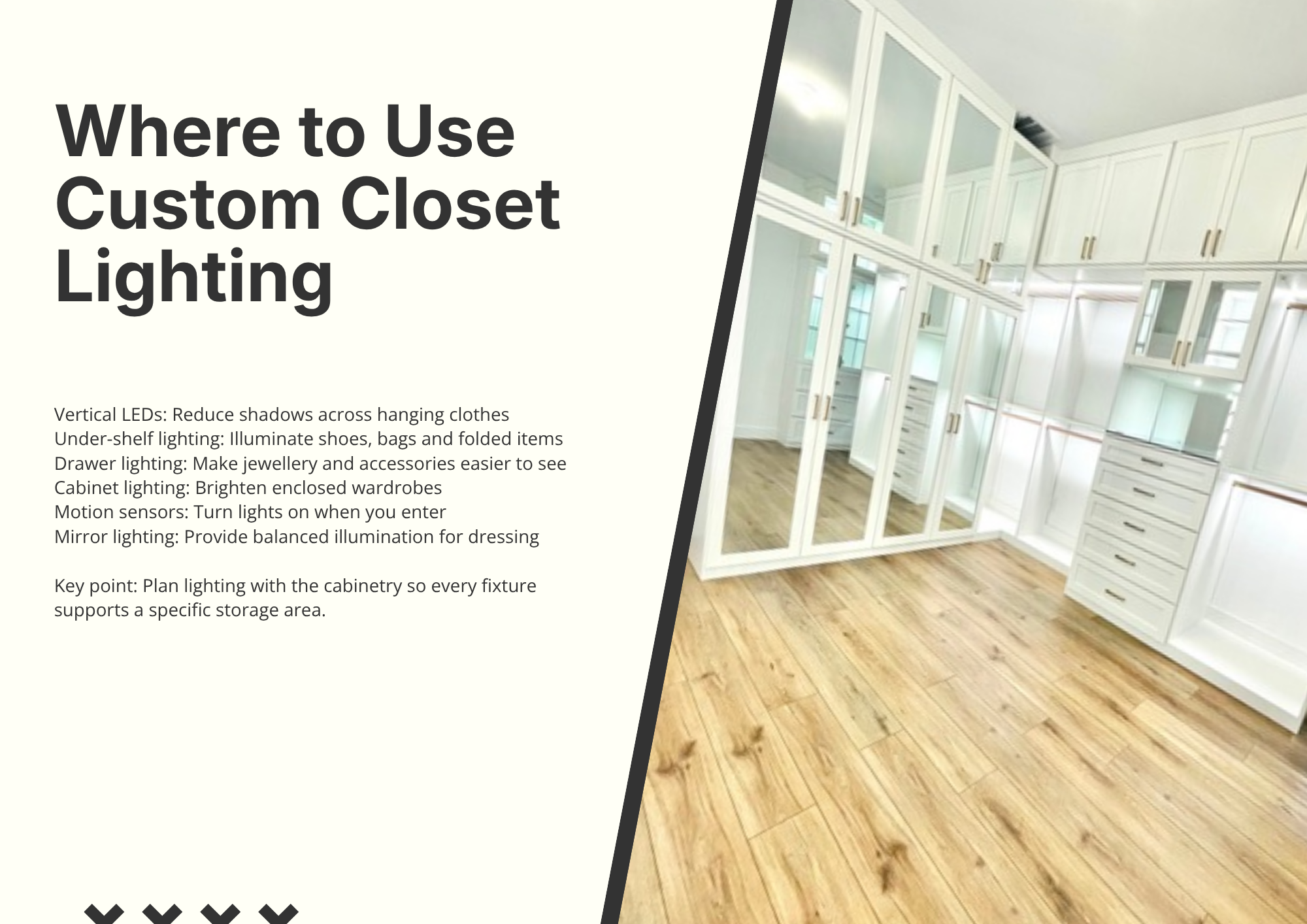
Start With the Existing Ambient Light
Integrated lighting should complement the room's existing illumination rather than automatically replace it.
Existing light may come from:
Ceiling fixtures
Recessed lights
Pendants
Natural light
Adjoining rooms
Consider whether the closet is windowless, whether the ceiling fixture creates shadows, and whether lower shelves or mirrors are difficult to see.
A decorative ceiling fixture may contribute to the overall appearance of a room, but it does not necessarily provide useful walk-in closet lighting inside deep shelving or hanging areas. General illumination and targeted storage lighting often serve different purposes.
Use Vertical LED Lighting for Hanging Sections
Vertical LED lighting can reduce shadows across hanging sections.
Placing lighting vertically along the sides of a wardrobe or hanging bay brings illumination closer to the clothing. This can be particularly useful for double-hanging sections, long garments, enclosed wardrobes, and deeper storage areas.
Vertical LED closet lighting can help distinguish darker colors and illuminate clothing from top to bottom. It can also create a clean appearance when the fixtures are recessed or fitted with appropriate diffusers.
Placement matters. The fixture should be positioned to limit glare while providing useful light across the garments. Wiring, fixture depth, and access for maintenance should all be considered during the cabinetry design.
Add Under-Shelf Lighting Where Shadows Form
Shelves naturally block light from reaching the area below them. Under-shelf lighting addresses this by directing illumination into the storage zone.
Useful applications include:
Shoe shelves
Handbag storage
Folded clothing
Display shelves
Dresser counters
Accessory stations
Vanity areas
Under-shelf lighting improves visibility on shelves and work surfaces below. It can be especially useful where a ceiling fixture leaves the lower portion of a storage bay in shadow.
Exposed bright LED points can create glare, particularly around eye level. Diffused lighting generally provides a more even appearance and integrates more naturally into custom cabinetry.
Consider Illuminated Hanging Rods
An illuminated hanging rod combines wardrobe lighting and clothing storage in one feature. Light positioned along the rod can shine directly onto garments while keeping the visual design relatively simple.
This approach can work well in enclosed wardrobes, compact hanging sections, or areas where additional fixtures would be difficult to position.
However, an illuminated rod should not automatically be expected to light an entire closet. Garment density, the depth of the storage and the overall closet layout all affect how much illumination it provides. Larger spaces may still need vertical or ambient lighting.
Add Drawer Lighting for Accessories and Jewelry
Drawer lighting is useful for jewelry, accessories, and other small items.
Shallow drawers containing watches, belts, ties, sunglasses, jewellery or other accessories can benefit from lighting that activates when the drawer opens and switches off when it closes.
This is one of the more practical closet drawer lighting options because the light moves with the storage rather than relying on illumination from above.
The lighting should complement the construction of the drawer itself. Features such as soft-close drawers, dovetail drawer boxes and premium undermount glides support smooth, quiet operation, while integrated lighting improves visibility inside the finished storage.
Why Soft-Close Drawers and Dovetail Construction Matter
Use Cabinet Lighting for Wardrobes and Closed Storage
Closed cabinet doors can create dark interiors even when the surrounding room is well lit.
Options for wardrobe lighting include:
Vertical interior strips
Top-mounted lighting
Door-activated lights
Shelf-integrated LEDs
Lighting inside tall cabinets
Cabinet lighting is most useful when the room's main light cannot reach the interior storage area.
Lighting inside a cabinet should account for door clearance, sensor placement, visibility across shelves and access to electrical components. Ventilation and component access should also be considered where enclosed equipment is involved.
Motion Sensors and Door Sensors Improve Convenience
Lighting controls should match how the closet is actually used.
Options include:
Motion sensors
Occupancy sensors
Door-contact sensors
Touch controls
Dimmers
Wall switches
Smart-home integration
Motion sensor closet lights can work well in a walk-in closet where someone enters with their hands full. A door sensor may be more appropriate for an enclosed wardrobe, while a dimmer can be useful in a dressing area used early in the morning or at night.
Sensor placement matters. A poorly positioned sensor may not activate consistently or may remain active when the space is not being used.
Choose the Right Color Temperature
Color temperature describes whether white light appears warmer and more golden or cooler and more blue.
It affects how clothing, cabinet finishes, flooring and surrounding materials appear. Warmer lighting can create a softer residential feel, while neutral white light may make clothing colors easier to distinguish. Cooler light can appear brighter but may feel less comfortable in some interiors.
There is no single color temperature that suits every closet. Consider the cabinet finish, wall color, flooring, mirrors, adjoining bedroom lighting and personal preference when selecting custom closet lighting.
Pay Attention to Color Rendering
Color rendering affects how accurately objects and materials appear under artificial light.
This can matter when choosing clothing or coordinating outfits. A homeowner may need to distinguish navy from black, cream from white or subtle differences between fabrics. It can also affect how jewellery finishes and cabinet colors appear.
The goal is not to turn a residential closet into a technical lighting project. It is simply to ensure that the chosen lighting provides a useful view of the items being stored.
Plan Lighting Around Mirrors and Dressing Areas
Larger closets may include a full-length mirror, vanity, dressing counter or seating area.
Lighting the storage and lighting the person are separate design tasks. A ceiling fixture may illuminate the room while still creating shadows across the face in front of a mirror.
Consider balanced illumination near dressing areas, accessible switches, glare on mirrors and changes in natural light throughout the day. Decorative lighting can contribute to the design, but functional lighting should remain the priority.
Custom Closet Lighting Ideas for Small Reach-In Closets
Small reach-in closets generally need targeted lighting rather than multiple decorative fixtures.
Useful options include:
Door-activated ceiling lighting
Vertical LED strips
Under-shelf lighting
Illuminated hanging rods
Motion sensors
Compact recessed fixtures
For example, a reach-in closet with double hanging may benefit more from vertical lighting beside the clothing than from an elaborate ceiling fixture.
This is also where closet lighting ideas should respond to the storage layout. If the main problem is a dark lower shelf, illuminate that shelf. If clothing blocks the ceiling light, bring illumination closer to the hanging section.
Custom Closet Lighting Ideas for Walk-In Closets
Larger walk-in closets can accommodate several layers of lighting, provided each has a clear purpose.
A plan might include:
Ambient ceiling lighting
Vertical wardrobe lighting
Under-shelf LEDs
Drawer lighting
Display lighting
Mirror or vanity lighting
Accent lighting around an island
Layered integrated LED lighting can make a larger closet easier to navigate while highlighting specific storage areas. However, adding more fixtures is not automatically better. Each lighting element should address a functional requirement.
Common Closet Lighting Mistakes
Several problems can be avoided by planning lighting with the cabinetry:
Planning lighting after the cabinetry is installed
Relying only on one ceiling fixture
Using exposed LED points without suitable diffusers
Ignoring shadows from shelves and clothing
Creating glare near mirrors
Forgetting access to drivers or transformers
Mixing incompatible color temperatures
Installing too much accent lighting
Failing to plan sensors and controls
Good lighting should feel intentional and easy to use rather than visually complicated.

Questions to Ask Before Adding LED Lighting
Before choosing custom closet lighting Sarasota homeowners can consider:
Which areas are currently difficult to see?
Is the closet a reach-in, walk-in or enclosed wardrobe?
Which shelves or hanging sections create shadows?
Should drawers or cabinets light automatically?
Is lighting needed near a mirror or dressing counter?
What color temperature works with the room?
Should the lights dim?
Are motion or door sensors appropriate?
Where will drivers and wiring be concealed?
How will components remain accessible?
Does the lighting coordinate with the bedroom?
Which features are functional rather than purely decorative?
Plan Closet Lighting Before Installation
A custom design consultation can help identify where shadows form, which storage areas need direct illumination and which lighting controls best fit the way the closet is used.
Why Work With a Custom Closet Designer?
A custom designer can coordinate the closet layout, cabinet dimensions, shelf placement, hanging sections, drawer construction, lighting channels, sensor locations, electrical access and finishes as one project.
Closet Envy provides custom closet Sarasota homeowners can design around their actual storage requirements and daily routines. Its approach combines custom cabinetry with features such as soft-close drawers, dovetail construction, undermount glides, premium finishes and integrated lighting.
The same whole-home approach can extend beyond closets to wardrobes, home offices, pantries and other storage areas. Professional installation helps ensure that the finished lighting and cabinetry work together as intended.
Frequently Asked Questions
Is LED lighting worth adding to a custom closet?
LED lighting can be worthwhile when shelves, clothing or cabinetry create dark areas that a ceiling fixture cannot reach. It may also improve visibility inside drawers, wardrobes, shoe storage and dressing areas. Its value depends on the closet layout and how the space is used.
What is the best type of lighting for a walk-in closet?
Most walk-in closets benefit from layered lighting, such as ambient ceiling light combined with vertical LEDs, under-shelf lighting and targeted illumination near mirrors or drawers. The best combination depends on the size, cabinetry, natural light and storage layout.
Can LED lights be added inside closet drawers?
Yes. Drawer lighting can be installed to activate when a drawer opens. It is especially useful for jewellery, watches, ties, belts and other small accessories. Wiring and sensor placement should be planned before the cabinetry is finalised.
Are motion-sensor closet lights a good idea?
Motion sensors can improve convenience in walk-in closets, especially when users enter with their hands full. They should be positioned carefully so they activate reliably and do not remain on unnecessarily.
What color light is best for a closet?
A neutral white light is often useful for seeing clothing colors clearly, while warmer light may better match the surrounding bedroom. The best choice depends on the cabinet finish, room design and homeowner preference.
Conclusion
Effective closet lighting is about visibility first and atmosphere second. The right custom closet lighting ideas can make hanging clothes, shelves, drawers, accessories and enclosed wardrobes easier to see without relying solely on a central ceiling fixture.
Vertical LEDs can reduce shadows across hanging sections, while under-shelf lighting can illuminate lower storage. Drawer and cabinet lighting can make smaller items easier to find, and sensors can make the system more convenient to use.
For custom closets Sarasota homeowners are planning, the lighting should be developed alongside the cabinetry so fixture locations, wiring, controls and finishes work together. Closet Envy can help design a custom storage system with integrated lighting around the space and the homeowner's routine.
