
Shoes, handbags, and jewelry all need different types of storage. Boots take up more vertical space than flats, structured handbags need room for their shape, and necklaces can become tangled when placed in the same compartment as rings. Using identical cubbies for everything may leave some areas crowded and others underused.
Planning custom closet accessory storage starts with the collection you own. Count and measure your shoes, handbags, and jewelry before choosing shelves or drawers. Keep frequently used items easy to reach, allow room for taller pieces, and size compartments around the items they will hold. Confirm insert dimensions, lighting needs, and care requirements before approving the design.
A little preparation helps you make better use of the available space while creating a layout that suits your daily routine.
1. Start with an accessory inventory
The first step is to list what you need to store and how often you use it. An accessory inventory helps you allocate space according to the size, shape, and access needs of your actual belongings.
Group shoes by type, handbags by shape and size, and jewelry by category. Separate everyday favorites from occasional or seasonal items. You do not need to measure every item individually at first. Start with representative examples, including your largest boots, tallest heels, widest bags, and longest necklaces.
Consider how much space each category deserves rather than dividing the closet equally. If the room is small, prioritising your most-used items can help with making better use of a small closet.
2. Plan shoe shelves around the footwear
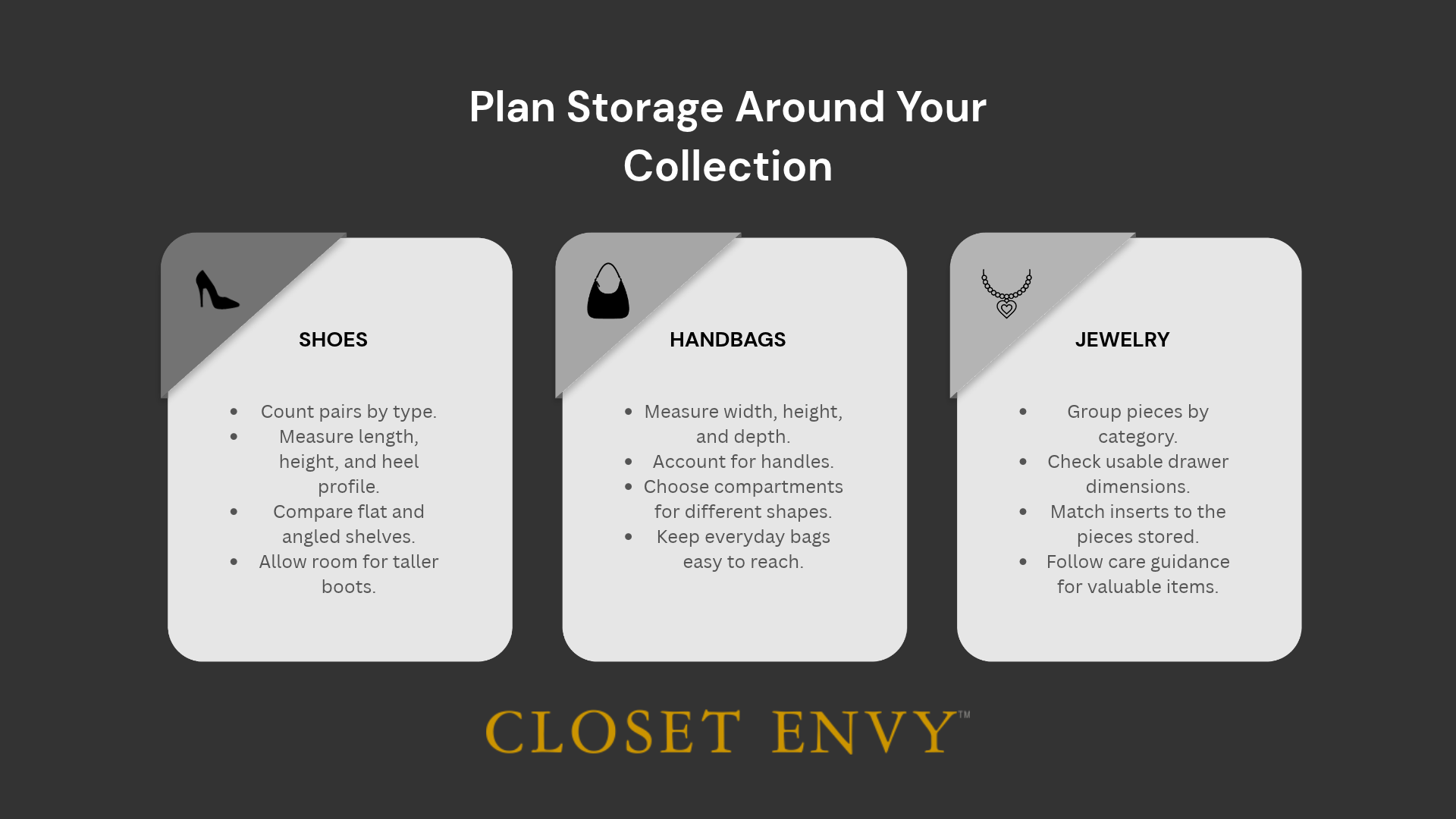
Custom closet shoe storage works best when shelf dimensions reflect the footwear you actually own. Measure a representative pair of each shoe type before deciding on shelf height, depth, and arrangement.
Flats, sneakers, heels, and ankle boots may fit into similar sections, but taller boots need additional vertical space. Measure footwear in its normal stored position, including any raised heel or unusual shape that affects how it sits on a shelf.
Adjustable shoe shelves can offer flexibility when your collection changes. They may allow you to accommodate different footwear heights without fixing every shelf at the same spacing. Ask the designer which adjustable options are available and how they fit the proposed closet system.
Angled shelves are another possibility when you want shoes to remain visible. Flat shelves may suit a simpler arrangement or provide more flexibility for different shapes. The right choice depends on the design, the available space, and how you prefer to find your shoes.
Plan for pairs to be stored together and frequently worn footwear to remain accessible. Check the proposed layout against your largest shoes rather than assuming every pair will fit because a standard pair does.
3. Give handbags space suited to their shape
Handbag storage ideas should account for each bag's dimensions, structure, and handles. Measure bags in the position you intend to store them so the shelves or compartments accommodate their actual shape.
Record the height, width, and depth of your larger handbags, including handles where they affect the required space. Structured totes, small evening bags, backpacks, and soft shoulder bags may need different arrangements.
Purse storage shelves can provide a clear place for bags while keeping them easy to see and reach. Individual compartments may help separate different sizes, while wider shelves can accommodate larger bags. The designer can help determine which approach fits the available room and the storage system selected.
Keep the bags you use most often within comfortable reach. Less frequently used pieces can occupy other suitable areas, provided you can access them without moving several bags each time.
Think about how each bag should be stored, too. Follow the manufacturer's care guidance for materials such as leather, suede, fabric, or embellishments. Do not assume that a particular shelf, cubby, or hanging hook will prevent distortion or protect every material.
Before approving the design, check that the largest bags fit without forcing handles into awkward positions or blocking access to neighboring compartments.
4. Choose jewelry drawers from the pieces inside
Jewelry drawer inserts should match the types of pieces you own and the way you prefer to organise them. Plan separate compartments for rings, earrings, watches, and necklaces, then confirm the usable drawer dimensions before choosing inserts.
Small compartments can keep individual categories separate, while larger sections may suit watches, bracelets, or pieces that need more room. Necklaces may require longer compartments than rings or earrings, depending on their chain length and design.
Measure the usable interior of the proposed drawer, not just its external dimensions. Drawer sides, runners, and other construction features can reduce the space available inside. Check the insert's external dimensions as well as its compartment layout to confirm compatibility.
A simple inventory can help you decide how much space to allocate:
Rings and earrings: Consider smaller compartments that make individual pieces easier to locate.
Watches and bracelets: Check the size and shape of each piece and any storage case you intend to keep.
Necklaces: Allow enough room for the pieces to lie in the intended arrangement without crowding.
Occasional jewelry: Decide whether it belongs in a dedicated compartment or a less frequently accessed drawer.
Material care is a separate consideration from layout. Follow the advice supplied by the jewelry maker, especially for valuable pieces or materials with specific storage requirements. Do not assume that a particular insert lining prevents tarnishing or provides security.
5. Balance visibility with concealed storage
The choice between open shelves and closed drawers affects how easily you can find accessories and how the closet looks when you enter it. Use visible storage for items you want to locate quickly and concealed compartments where you prefer a less visually busy arrangement.
Open shelves can make shoes and handbags easier to see. However, displaying every item may create a crowded appearance if the collection is large. Closed drawers can keep smaller accessories out of sight while allowing you to organise them by category.
A mixed layout may work well. For example, frequently worn shoes could sit on accessible shelves, handbags could occupy dedicated compartments, and jewelry could be organised in drawers. The exact arrangement should reflect your collection rather than a standard template.
Lighting can also help you identify items, particularly in deeper storage areas. Consider closet lighting for shelves and drawers when reviewing the layout. Ask the designer which lighting options are available and how they would work with the proposed shelving and cabinetry.
Keep material care in mind when choosing between visible and concealed storage. Neither option automatically provides the right conditions for every accessory. Follow product-specific guidance for light-sensitive materials, leather, jewelry, and other items requiring particular care.
The aim is to make storage easy to use while keeping the collection arranged in a way that suits your preferences.
6. Review the layout using your real collection
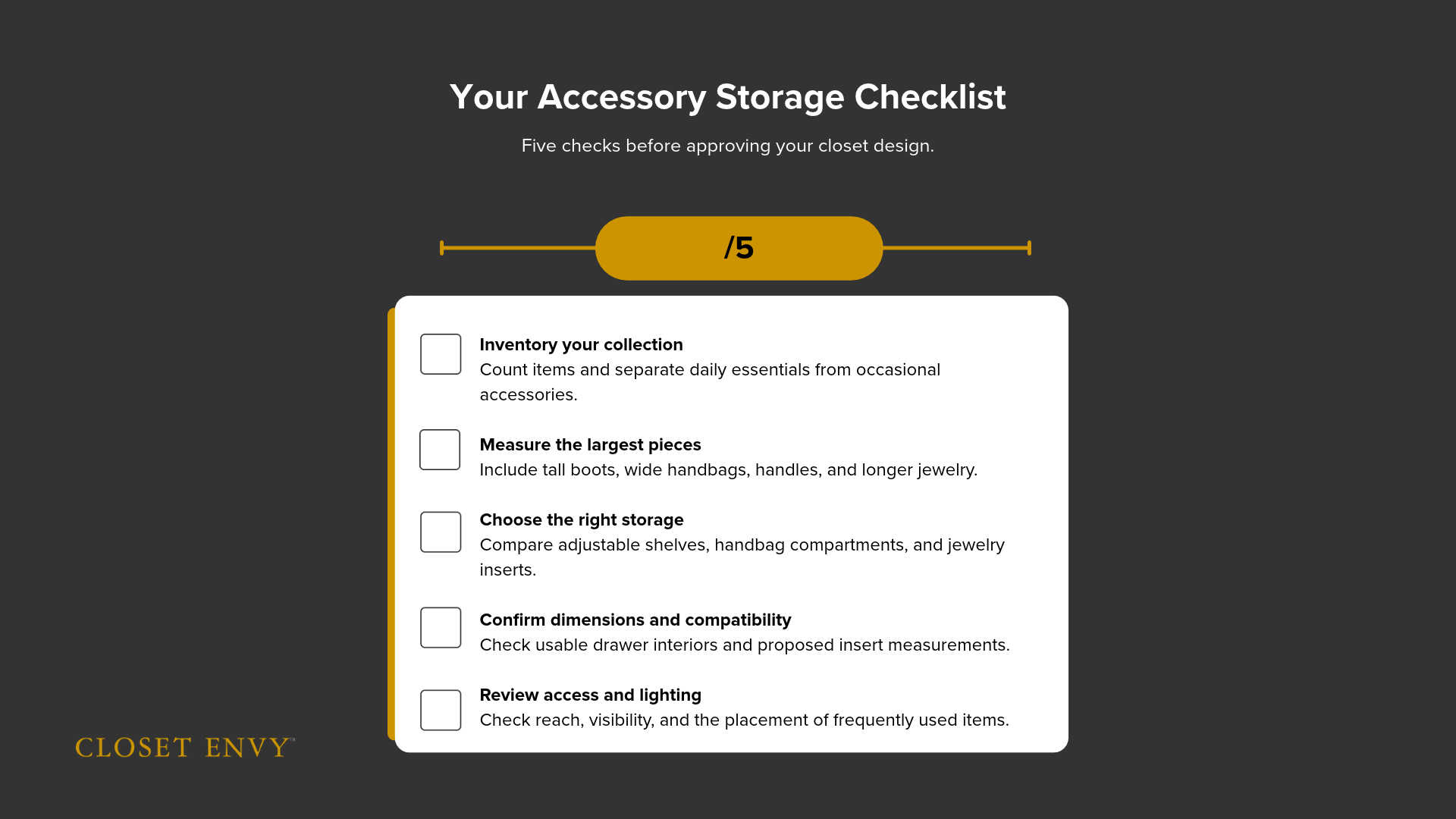
Before approving your design, check the proposed compartments against representative items from your collection. A final review helps identify sizing problems and confirm that the selected shelves, drawers, and inserts work together.
Bring your inventory and measurements to the design discussion. Ask the designer to check the largest shoes and bags, the usable interior dimensions of jewelry drawers, and compatibility between any proposed inserts and the selected cabinetry.
Leave some flexibility where practical. Your collection may change as you replace shoes, acquire handbags, or add accessories. Adjustable shelving or a mix of compartment sizes may help accommodate different items later, depending on the system selected.
Closet Envy offers custom closet design, drawer islands, and integrated accessories as part of its service offering. Its website also describes dovetail drawer boxes, undermount glides, and soft-close doors and drawers. Confirm which features and accessory options are available for your specific project rather than assuming every design includes them.
If you are planning Sarasota custom closets, review the proposed layout in the context of your room, storage priorities, and daily routine. Ask to discuss a visual representation of the design so you can evaluate the placement of each section before making a final decision.
Conclusion
Good custom closet accessory storage begins with the items you need to store, not a set of identical shelves and drawers. Measuring your shoes, handbags, and jewelry helps you allocate space where it is useful and identify which compartments need to accommodate unusual shapes or sizes.
Before approving a design, check the measurements, confirm insert compatibility, and consider how easily you can reach everyday accessories. If you are planning a new closet in Sarasota, explore Closet Envy's custom closet design services and book a discovery call to discuss your collection and storage requirements.
